A dehumidifier is not a small air conditioner.
Both push refrigerant through a coil. From there, they part ways. One is built to cool the air; the other is built to dry it. Confuse them and you end up with a room that is cold, damp, and oddly miserable.
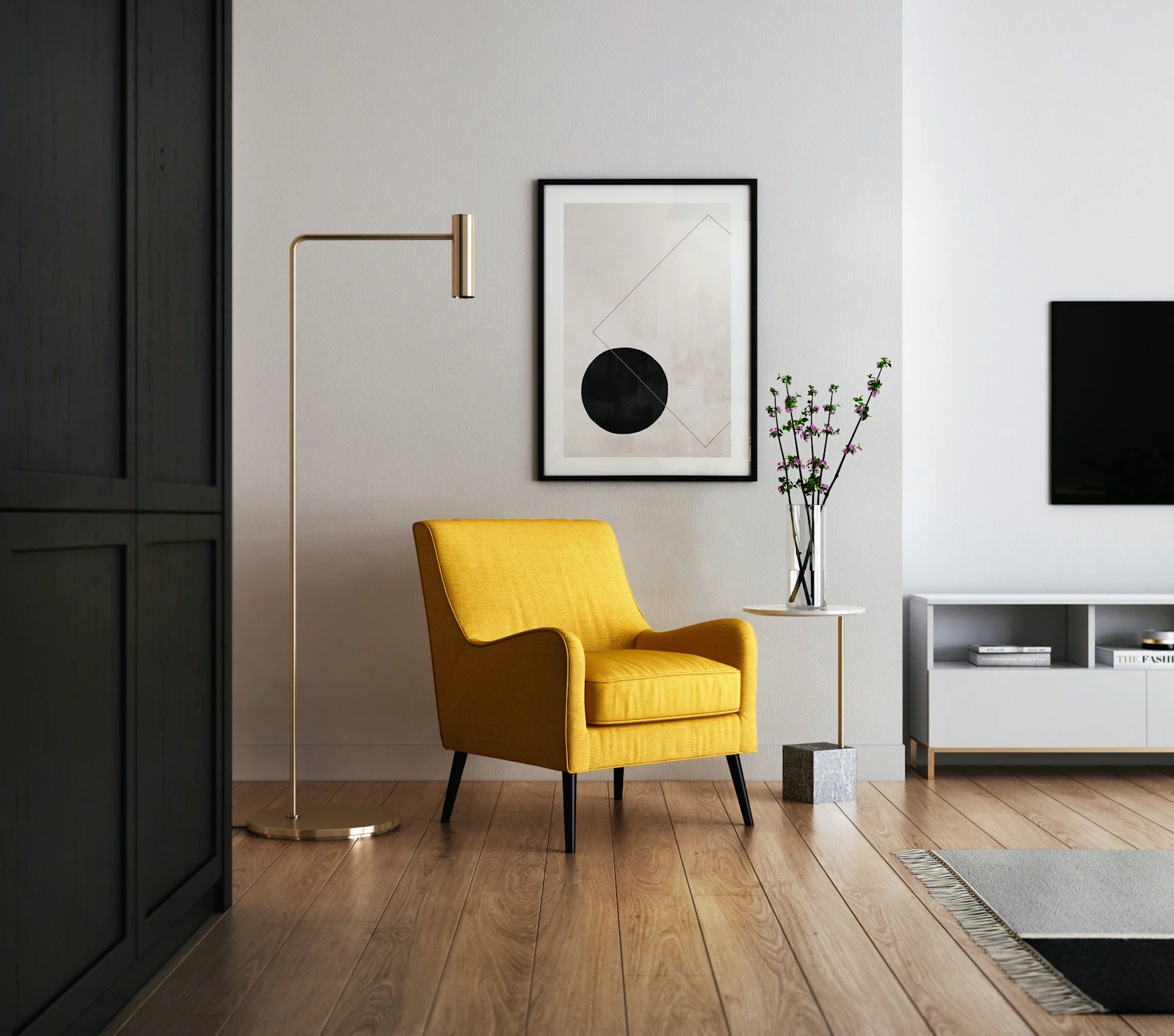
If you live in Singapore, you have probably had this experience: you set the aircon to 23°C, the room cools down within twenty minutes, but a few hours later everything feels clammy. Your clothes in the wardrobe pick up a slight musty smell. The bathroom mirror takes longer to clear after a shower. The aircon is doing its job — it just is not the job you actually wanted done.
Two kinds of heat in air
Air carries two kinds of energy. Sensible heat is the temperature you read on a thermometer. Latent heat is the energy stored in water vapour. In Singapore's outdoor air at 32°C and 85% RH, more than half of the cooling load is latent — the energy needed to condense water out of the air, not to drop its temperature.
An air conditioner is sized and tuned to remove sensible heat. It removes some moisture as a side-effect when the coil gets cold enough to condense, but moisture removal is not what it is optimising for. A dehumidifier flips the priority: it is sized to remove latent heat (and the moisture along with it), and the small amount of cooling it produces is the side-effect.
Why your aircon leaves the room clammy
Modern inverter aircons in Singapore homes are oversized for the space they serve. That is partly market preference and partly the way they are spec'd: people buy them on horsepower, not on a proper room calculation. Oversizing means they hit setpoint temperature quickly, the compressor throttles right down, and the coil never stays cold long enough to remove much water. You end up at 24°C and 75% RH — cool but sticky.
"Dry mode" on the remote does help a bit; it forces the compressor to keep running at a lower fan speed so the coil stays cold. But aircon dry modes still target a temperature, not a humidity setpoint. They are a compromise, not a fix.
What a dehumidifier does differently
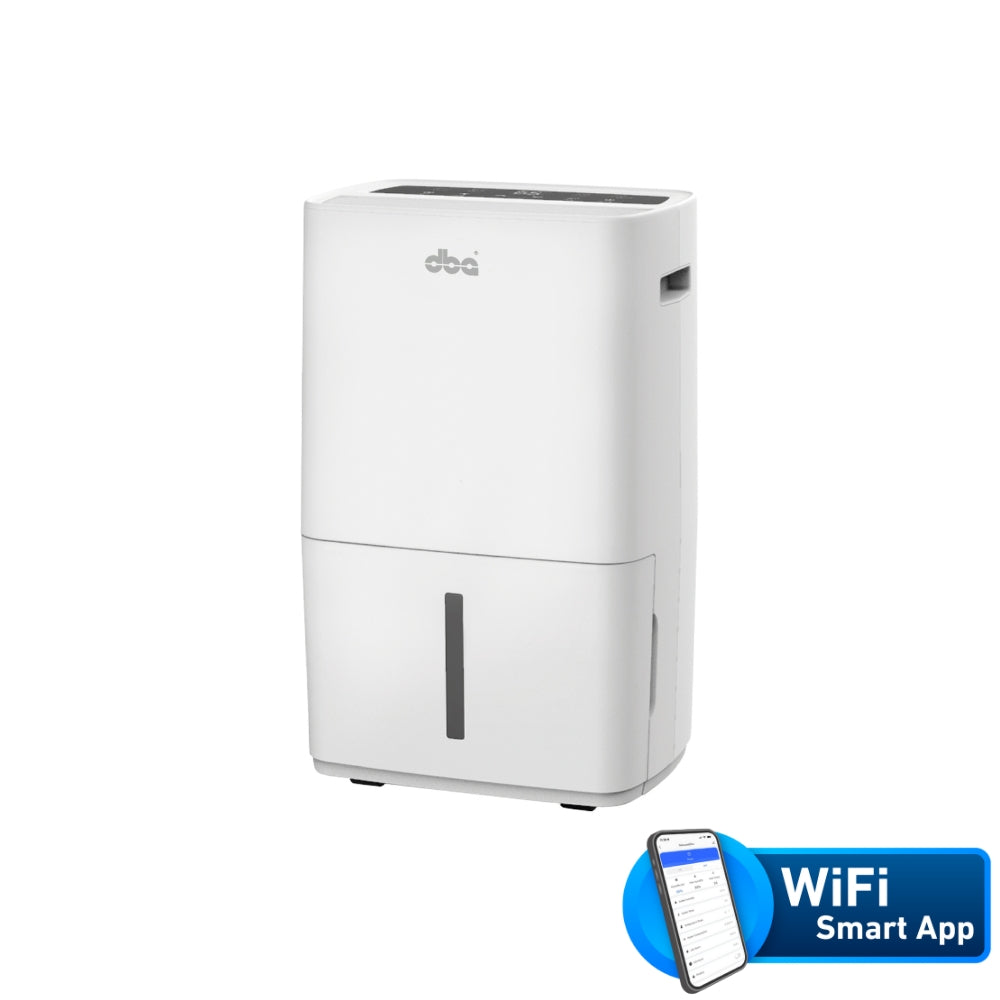
A dehumidifier takes air over a cold coil exactly like an aircon does — water condenses, the liquid is drained away, and the now-dried air passes over a hot condenser coil before being returned to the room. The hot condenser is the bit aircons put outside. A dehumidifier puts it inside, on purpose. The result is dry air at roughly the room temperature, with a tiny net heat gain (the compressor work) added back to the room.
This sounds inefficient until you remember what you are trying to achieve. Removing 10 litres of water per day from a 1,000 sq ft apartment with an aircon alone is hard work; the compressor has to run cold and long. Doing the same with a dedicated dehumidifier — say a DBA-UTC68 ceiling unit at 68 L/day rated capacity — uses far less electricity per litre removed, and gives the aircon the easy job of just topping up the cooling.
The combination most Singapore homes actually want
Run the dehumidifier hard. Hold the room at 55% RH. Now the aircon does not have to do the latent work — it just trims temperature. Two consequences:
- The aircon can run warmer. Dry air at 26°C feels like wet air at 23°C, because evaporation off your skin is the main reason you feel cool. The thermostat goes up; the bill goes down.
- The room actually feels comfortable. Wood floors stop expanding and contracting. Wardrobes lose the musty edge. Sheets no longer feel damp at night.
For a typical 4-room HDB or condominium, a UTC68 ceiling unit (68 L/day) paired with the existing FCU is the most common combination we install.
The energy maths
A 2 HP aircon trying to do dehumidification in Singapore uses roughly 1.4–1.8 kWh per litre of water removed when oversized and short-cycling. A dedicated dehumidifier sized correctly sits at 0.4–0.6 kWh per litre. The dehumidifier handling latent load and the aircon handling sensible load is typically 15–25% cheaper to run than the aircon trying to do both.
Can a dehumidifier replace your aircon?
In Singapore, no. You will still want active cooling on hot days. But it can replace a lot of aircon runtime, and on cooler nights — December and January, when outdoor temperatures sit at 25–27°C — a dehumidifier alone is often enough.
In drier climates, a dehumidifier alone can carry a much larger share of the comfort load. That is less relevant here, but it explains why dehumidifiers are sometimes marketed as "air conditioner replacements" overseas. In Singapore, the realistic frame is partnership, not replacement.
When you do not need one
To be honest: if your space already sits at 50–60% RH without any intervention, you do not need a dehumidifier. The simplest test is a $30 hygrometer left in the room overnight. If you wake up to 55% RH and the room feels comfortable, leave it alone. If you wake up to 75% and the windows are fogged, that is the signal.
If you would like to know what setup actually fits your apartment or office, send us your floor plan and the current humidity reading. We will reply with a sensible recommendation — sometimes that recommendation is "no dehumidifier needed", and we will say so.
Talk to us
Not sure if you need a dehumidifier?
Send your floor area and current room humidity and we will say honestly whether one is worth it.
Request a quote